
Begin with the company’s purpose and the actual window available. A day of discovery, a celebration, and a facilitated team session are different priorities. Saigon Local Tour’s tour and day-trip collection can help start the travel discussion. Ask for a proposed excursion matched to the group, then assess any team activity against that itinerary. This guide explains the planning choices; its examples are not a confirmed tour route, venue reservation or journey-time guarantee.
Choose The Main Purpose Of The Day
If the group has a full conference schedule, a shared excursion may be valuable on its own. Participants can discover a different setting and talk during the journey and lunch. A competitive activity is optional. Adding games merely because the outing is described as a company trip can overload the day and reduce time with local hosts.
If the company wants a more deliberate team session, define the desired interaction. Colleagues might need to exchange ideas across offices, make a decision together or celebrate an achievement. A short activity in an agreed private area can serve that purpose more clearly than trying to turn every boat ride or cultural stop into a challenge.
State which part of the day should survive if time becomes constrained. The company might prioritize the river experience and lunch, or a reserved activity area and closing discussion. The guide and organizer need the same priority order so a late departure does not produce conflicting decisions.
Build The Day Around Confirmed Travel Arrangements
The trip begins with getting the group out of the hotel and into the agreed transport. Share the accommodation address, pickup arrangement, and any participants joining from another location. Include room checkout, luggage handling and onward plans if the excursion falls on a departure day. These details can change whether a proposed day trip is a sensible fit.
Ask the travel organizer for estimates for the actual route, date, and group. Do not use a map’s driving estimate as the full journey plan. Gathering the group, comfort stops, boarding and moving between different experiences all use time. Allow the travel team to explain which transitions are fixed and which can be adjusted.
For an illustrative ten-hour window, the organizer might first allocate the travel team’s estimated outbound and return travel, then lunch, visitor activities, transitions, and a reserve. If those allocations leave too little room for the intended team session, shorten the activity brief or choose a different excursion. There is no useful universal number of games for a Mekong day trip.
Check What Each Stop Can Actually Support
A stop suitable for sightseeing does not automatically provide space for a company programme. Ask whether a private activity area is available, what use is permitted, and how the group reaches it. Check where people wait and whether other visitors will be present. The venue or host should confirm the arrangement before the company adds equipment, music or organized challenges.
| Part of the day | Planning question | Company activity implication |
|---|---|---|
| River excursion | How is boarding and regrouping managed | Keep tasks compatible with operator instructions |
| Local visit | What interaction has the host agreed to | Use respectful observation rather than surprise games |
| Lunch stop | Is a separate area available and booked | Do not assume dining space is an activity venue |
| Private team session | What layout and use are confirmed | Design the activity around that space |
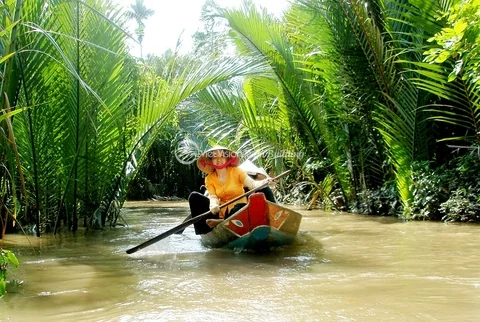
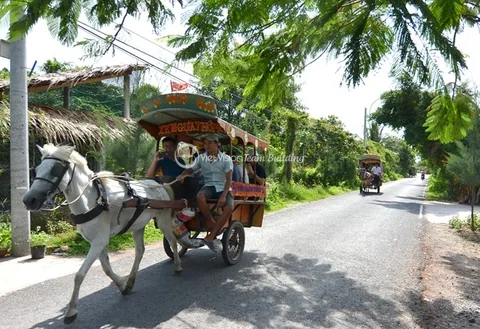
If the proposed experience includes smaller boats, village transport or walking sections, ask the operator to explain the arrangements and participation options. Confirm those details for the actual group rather than assuming that every visitor can use the same boarding point or transport type. The illustrations show different excursion settings, not services included in a particular booking.
Give The Team Activity Its Own Space And Purpose
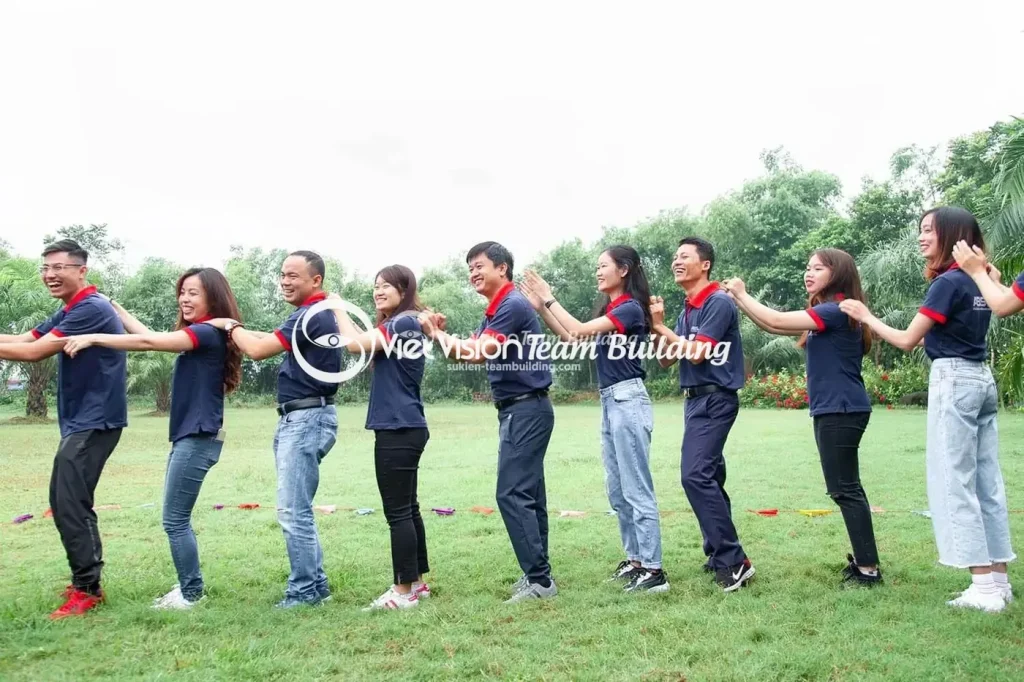
A focused session can be easier to fit than a series of challenges across several visitor stops. For example, teams could work on a collaborative construction task using materials supplied by the activity team, compare their approach and finish with a shared explanation. That example requires a suitable agreed area; it should not be improvised on a jetty, boat or busy market path.
For a company that needs activity design and delivery as part of the outing, review Viet Vision Team Building’s company programme services. The service page is in Vietnamese and describes different formats and planning considerations. Use it to discuss the objective, staffing, equipment, and proposed scope. A separate Mekong itinerary, activity space, and delivery arrangement still need confirmation for the trip; the service description is not a reservation at a local stop.
Keep a clear boundary between the excursion guide and the activity facilitator. The guide manages the visitor experience and travel movement. The facilitator explains the team task and leads its closing discussion. Agree who receives the group, who checks the participants and who decides when the session must end to protect the return plan.
Use Local Experiences Respectfully
The appeal of the excursion comes partly from encountering a setting different from the company’s usual workplace. Let the local guide introduce it. A useful company task can ask participants to share something they noticed or a question they discussed with the guide. It should not encourage colleagues to interrupt hosts, invent a performance in a working space or compete over photographs of residents.
When a local interaction is proposed, confirm what has been arranged and how the hosts participate. Avoid promising a spontaneous workshop or access to a household because a similar activity appeared in another tour description. The itinerary should name the agreed experience and any conditions, including what happens if the host cannot receive the group.
Keep company branding proportionate to the setting. A private team area may accommodate agreed signage. A cultural or everyday visitor stop may not. Ask before using props, banners or amplified sound, and let the local operator explain what is appropriate.
Protect Lunch And The Return Commitment
Lunch is both a practical break and a chance for colleagues to talk. Confirm the serving arrangement, menu requirements, and time available. If the company wants introductions across departments, plan the seating or use one light conversation prompt. Avoid adding a long presentation that pushes the meal against the next departure.
Agree a latest start time for the return journey with the travel organizer. Make it visible in the working schedule and identify which optional activity can be shortened. If the group has a dinner, meeting or flight afterward, provide the required arrival arrangement in the original brief. The travel team should assess whether those commitments are compatible before the excursion is confirmed.
The closing company discussion can be deliberately brief. Ask teams to share one observation or acknowledge a colleague’s contribution. A short close delivered on time is more useful than a promised ceremony that repeatedly delays the next part of the trip.
Compare Proposals On The Whole Experience
When reviewing proposals, compare the same group size, dates, travel arrangements and programme scope. Check whether the activity area is included, who supplies equipment and whether the outing is private or shares services with other visitors. Ask how adjustments affect the meal, transport and supplier commitments. A headline per-person price alone does not explain the company experience.
Send Ho Chi Minh City Tours day-trip enquiry with the group profile and the purpose of the outing. State whether you want discovery only or an additional facilitated session. The strongest proposal will make the trade-offs visible: what the group experiences, how it moves between components, and how much time remains for meaningful team interaction.
Frequently Asked Questions
Does A Company Day Trip Need Organized Games
No. An excursion and shared lunch may meet the company’s needs. Add a structured session only when it has a clear purpose and fits the agreed travel and venue arrangements.
Can A Team Activity Take Place At Any Lunch Stop
No. Confirm a suitable area, permission for the proposed activity, and the space available for participants. A restaurant booking does not automatically include a private activity venue.
What Matters Most When The Group Has Plans Afterward
Share the onward commitment before booking. Agree the required return arrangement with the travel organizer and keep a clear priority order for shortening optional parts of the excursion.
