
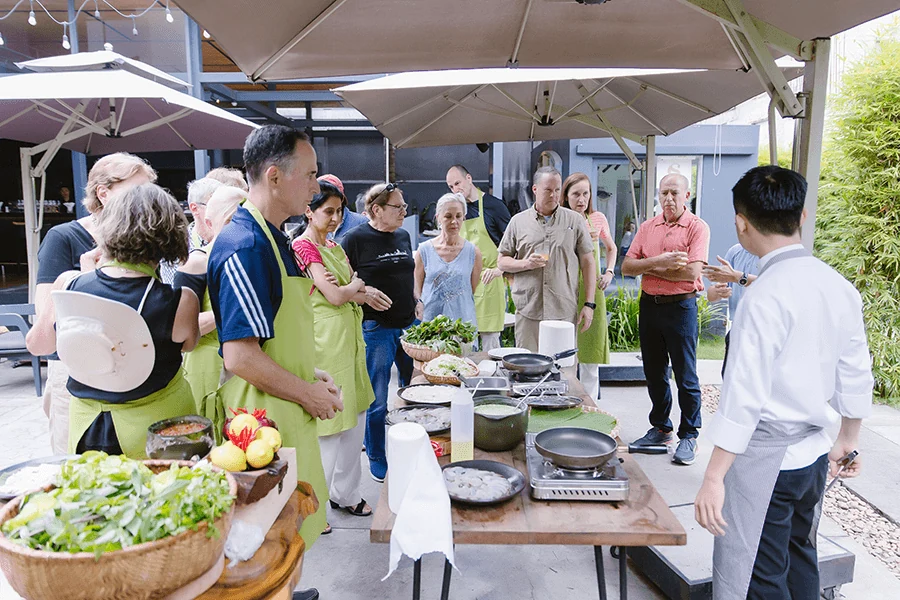
Saigon Local Tour features a gourmet experience with cooking-class options, including a group and team-building option. Use the current offer as a starting point for an enquiry, then confirm the operator, menu, venue and conditions for your group. This guide focuses on designing the company interaction around a cooking experience. It does not replace the culinary operator’s instructions or specify a package that every group can book unchanged.
Decide What The Company Wants People To Practise
Start with one achievable outcome. A visiting group that does not know one another may benefit from introductions and shared responsibility. Colleagues from several functions might practise dividing tasks and explaining decisions. A team celebrating a milestone may simply want an enjoyable local experience and time to talk. Each objective calls for a different amount of competition.
If the purpose is communication, make sure the activity actually requires communication. Giving each team the same recipe and judging only the finished dish may reward the most experienced cook. An alternative is to ask participants to agree on roles, explain how they will organize the work and reflect afterward on one decision they changed. The chef remains responsible for the culinary process; the company activity concerns how colleagues work together.
Keep the business connection light enough for a leisure setting. A cooking class does not need a speech about company values between every preparation step. One clear instruction and a short closing discussion can give the experience a purpose while leaving room for the food and the people hosting it.
Separate Culinary Guidance From Team Facilitation
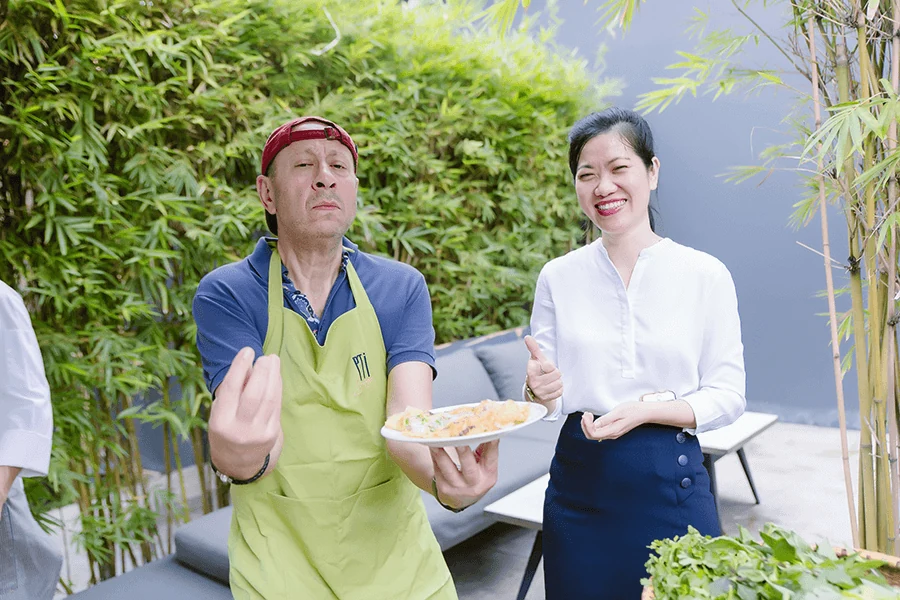
The culinary operator determines how equipment is used, what participants may handle, and how food is prepared and served. The company organizer should not alter these instructions to make a challenge more competitive. The activity facilitator can help explain roles, coordinate team presentations, and collect observations, but should work within the kitchen team’s operating boundaries.
| Part of the experience | Lead responsibility to confirm | Company organizer input |
|---|---|---|
| Menu and preparation | Chef or culinary operator | Group preferences and dietary requirements |
| Equipment and station use | Culinary operator | Headcount and participation needs |
| Team roles and reflection | Agreed facilitator | Company objective and team composition |
| Travel and arrival | Tour organizer | Hotel, meeting schedule and fixed commitments |
For a tailored company programme, discuss the interaction and coordination brief with Viet Vision Team Building. Its published services include company activity and event design; a cooking programme still needs the culinary operator’s separately confirmed delivery scope. The website is primarily in Vietnamese, so specify the language needed for proposals and facilitation. Ask how any proposed team activity would work alongside the chef’s lesson rather than assuming the event brand supplies the cooking class itself.
Use The Market Visit To Encourage Observation
Where a market visit forms part of the confirmed experience, give the group a task that supports discovery. Teams could compare the appearance of ingredients selected by the guide, record a question about their use or explain what surprised them. The local guide should manage the visitor interaction. Participants should not approach vendors with a competitive task that the hosts have not agreed.
A good market task has a clear limit. Asking one observation question per team is easier to manage than sending several groups to buy unrelated ingredients. If purchasing is included, the operator should confirm the permitted budget, who handles payment and which ingredients may be used. Avoid designing a challenge around bargaining, taking unsolicited portraits or moving quickly through busy trading spaces.
The market component also changes the schedule. Walking, waiting for the whole group, returning to transport and reaching the kitchen are real parts of the experience. Ask for an itinerary that includes these transitions. A four-hour activity window cannot be treated as four hours of cooking if it also contains a market visit and transfers.
Give Each Participant A Useful Role
Before dividing the group, ask the operator how many participants can actively use each station. Eight people assigned to a work surface designed for four will not all have a meaningful task. The organizer should choose team sizes around the confirmed space and equipment, not around an attractive team name or an even headcount.
Possible roles include reading the instructions, organizing the agreed ingredients, coordinating the preparation sequence and presenting the team’s approach. Rotate roles when the lesson permits so one confident cook does not perform every important step. Provide a role away from direct food handling for anyone who requests it. The chef decides which substitutions and participation arrangements are feasible.
A simple planning example is 24 participants in four groups of six, subject to the kitchen’s approval. If the class has only three workable stations, the answer is not to squeeze in a fourth group. Discuss a different layout, an agreed rotation or a smaller participating session with the operator. Keep anyone waiting occupied through an appropriate observation or presentation role.
Make The Challenge Fair Without Rushing The Cooking
Explain the judging criteria before the activity begins. If the company objective is collaboration, consider separate recognition for organization, clear presentation and cooperation. Culinary assessment belongs with the qualified host. Avoid adding a speed award that pressures participants to skip instructions or changes how the dish should be prepared.
Teams need comparable conditions. Check whether they receive the same equipment access, ingredient choices and preparation time. If menus differ because of dietary arrangements, the organizer should reconsider direct comparison rather than treating the difference as a disadvantage. A celebration format with several recognition categories may fit better than one overall winner.
Agree who makes the final judging decision and how it is announced. An illustrative scoring model might assign equal emphasis to planning, cooperation and presentation, while keeping the chef’s assessment separate. This is a possible activity design, not a universal culinary standard. Ask the operator to review it before including it in participant instructions.
Protect Time For Sharing The Meal
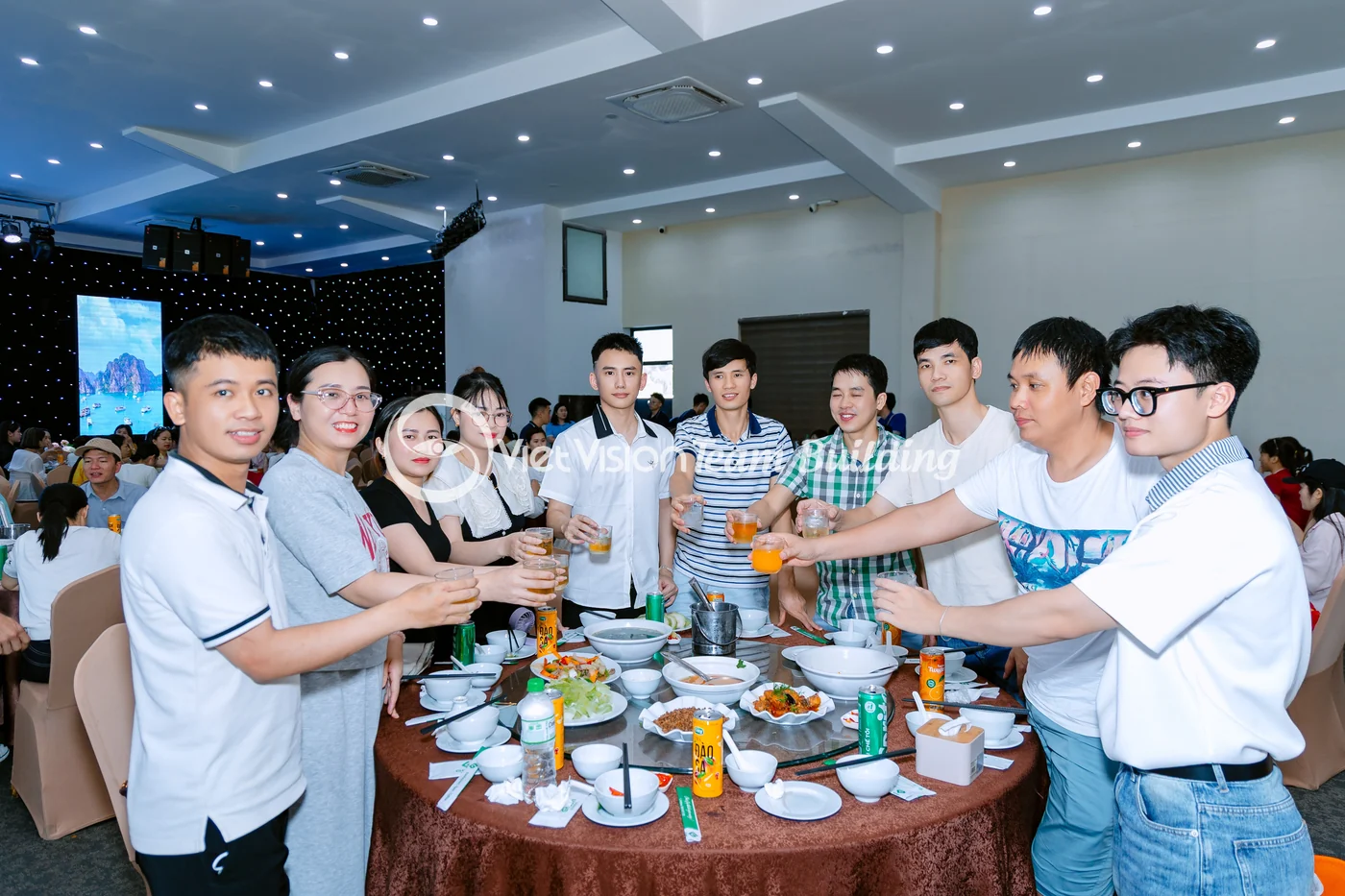
The shared meal is part of the company experience. Do not use all the available time for competitive preparation and then ask colleagues to eat quickly before the coach departs. Work backward from the departure requirement and reserve a meal period that the operator considers suitable. Presentations can be short, with one speaker per team explaining a choice and thanking the people who helped.
Collect dietary requirements through a suitable private process before menus are confirmed. Pass the relevant information to the culinary operator and ask what can be accommodated. Do not promise that an ingredient can simply be removed, or that a shared cooking station suits every requirement. The operator needs to explain the arrangements and any limitations.
During the meal, a short prompt can connect the activity to the company purpose: “Which handover helped your team most?” Let people answer voluntarily. A relaxed conversation often suits the setting better than a long evaluation form, particularly when this is one experience within a larger incentive trip.
Send A Brief That The Hosts Can Use
Include the headcount, language needs, available window and preferred level of participation. Explain whether the group wants a demonstration, hands-on cooking or a facilitated challenge. Ask how the market, preparation, presentation and meal are sequenced, and whether the venue is shared with other guests. Request clarity about changing the programme if the group arrives late.
When enquiring through Ho Chi Minh City tours, share the company objective as well as the preferred date. That allows the travel and culinary discussions to start from the same brief. Finalize the menu and operator instructions before the company team adds tasks or prizes, so the experience remains enjoyable for participants and workable for the hosts.
Frequently Asked Questions
Does A Cooking Class Need To Be Competitive
No. Shared preparation, introductions and a meal may meet the company objective. Add judging only when it improves participation and the culinary operator approves the format.
How Should Teams Be Sized
Use the operator’s confirmed station layout and equipment access. Give every participant a useful role, and discuss rotations when the space cannot support all teams simultaneously.
Who Should Handle Menu Requirements
The company organizer collects the relevant requirements and the culinary operator confirms what it can accommodate. Keep those arrangements separate from team scoring or competition rules.
