Discover Tra Su Cajuput Forest in Southern Vietnam – a breathtaking wetland sanctuary near Saigon. Let's go together with Saigon Local Tour, explore travel guide, best time to visit, wildlife, boat tours, photography tips & sustainable travel insights.
Tra Su Cajuput Forest – A Serene Escape into Southern Vietnam’s Natural Soul
For international travelers seeking an authentic, slow-paced, and immersive nature experience beyond Vietnam’s busy cities, Tra Su Cajuput Forest stands out as one of Southern Vietnam’s most rewarding destinations. Located in An Giang Province, near the Cambodian border, this protected wetland forest is a rare ecosystem where flooded cajuput trees, emerald-green duckweed canals, and rich biodiversity coexist in quiet harmony.
Unlike mass-tourism hotspots, Tra Su Cajuput Forest appeals to travelers who value nature, photography, wildlife observation, sustainability, and cultural depth. For Ho Chi Minh City tours and exploring Southern Vietnam with curated itineraries, Tra Su offers a refreshing contrast: peaceful, atmospheric, and deeply connected to the Mekong Delta’s ecological heritage.
This in-depth guide is designed to help you fully understand why Tra Su Cajuput Forest deserves a place on your Vietnam itinerary, how to visit it comfortably from Saigon, and how to experience it in a meaningful, responsible way.
Where Is Tra Su Cajuput Forest and Why It Matters
Tra Su Cajuput Forest lies approximately 250 km southwest of Ho Chi Minh City, within An Giang Province – a region known for its spiritual sites, floating villages, and diverse ethnic communities. The forest covers more than 850 hectares and functions as a seasonally flooded wetland ecosystem, playing a critical role in water regulation, biodiversity conservation, and climate resilience in the Mekong Delta.
What makes Tra Su unique is not just its visual beauty but its ecological importance. It serves as a sanctuary for over 140 species of plants, 70 species of birds, and dozens of fish, reptiles, and amphibians, many of which are rare or migratory. For environmentally conscious travelers, visiting Tra Su is not only a leisure activity but also a chance to witness Vietnam’s commitment to preserving fragile wetland habitats.
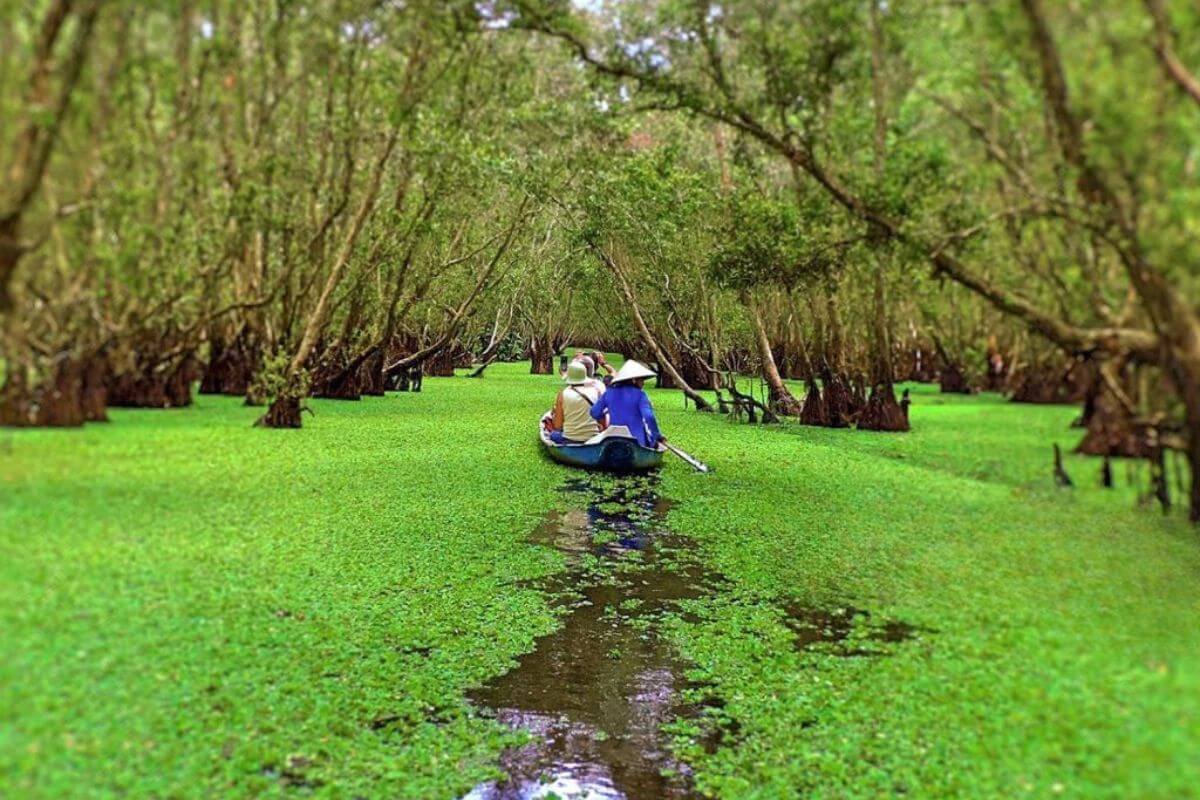
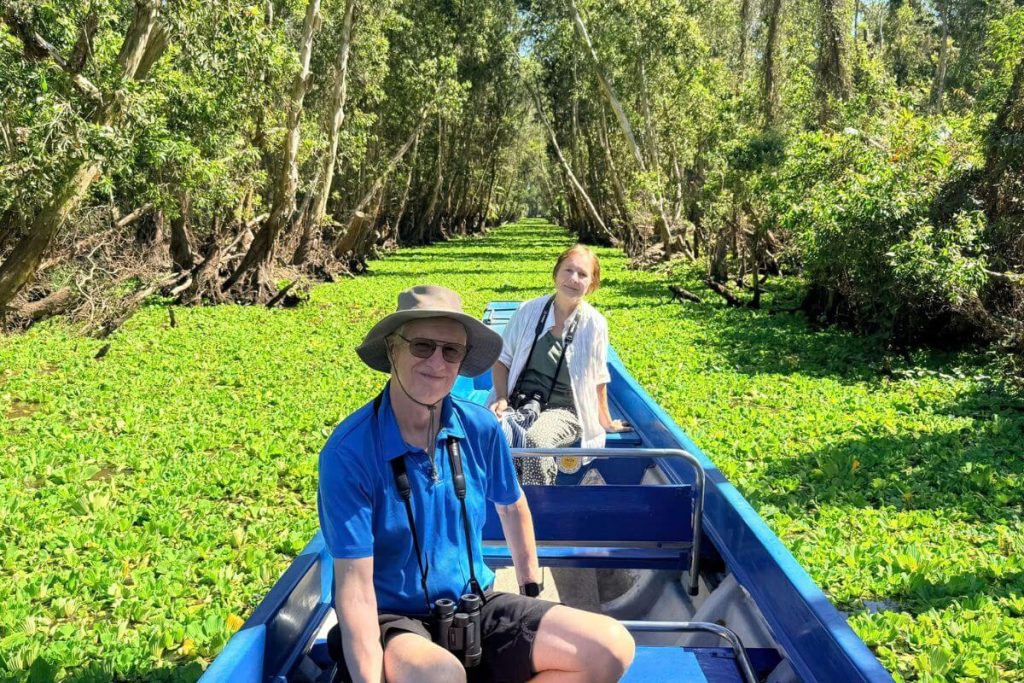
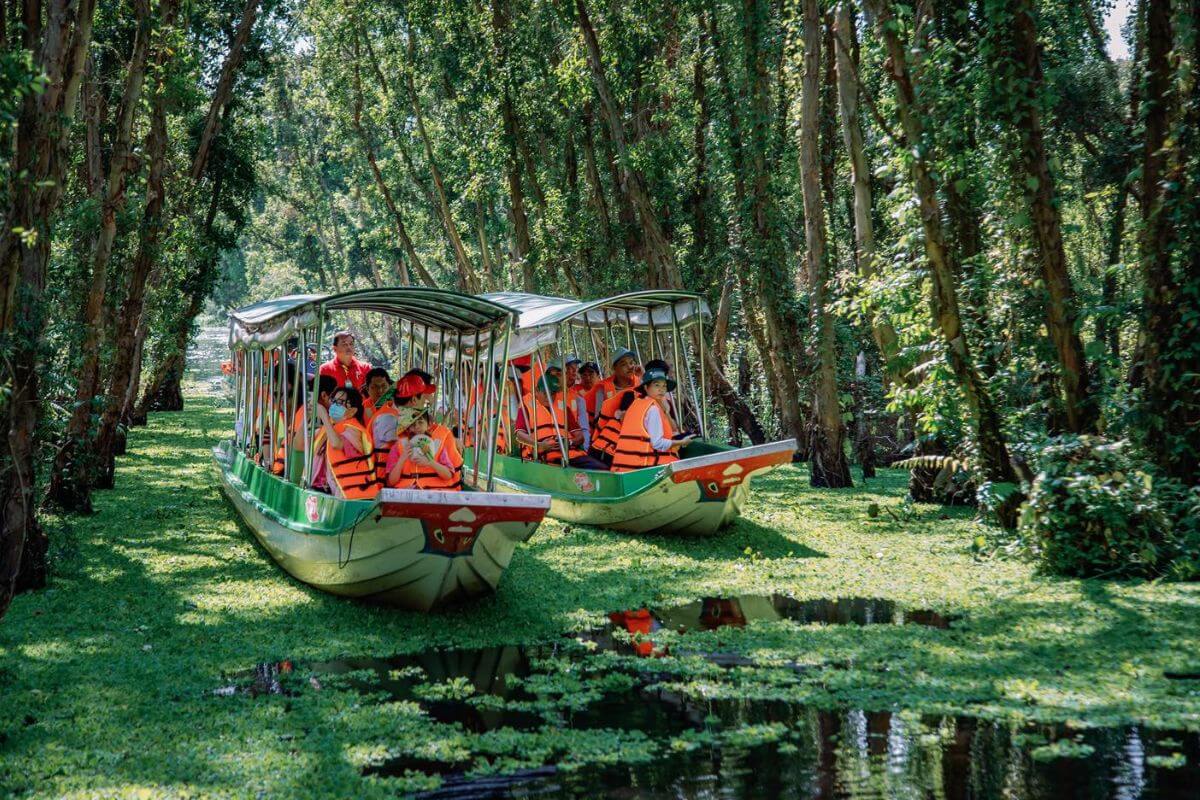
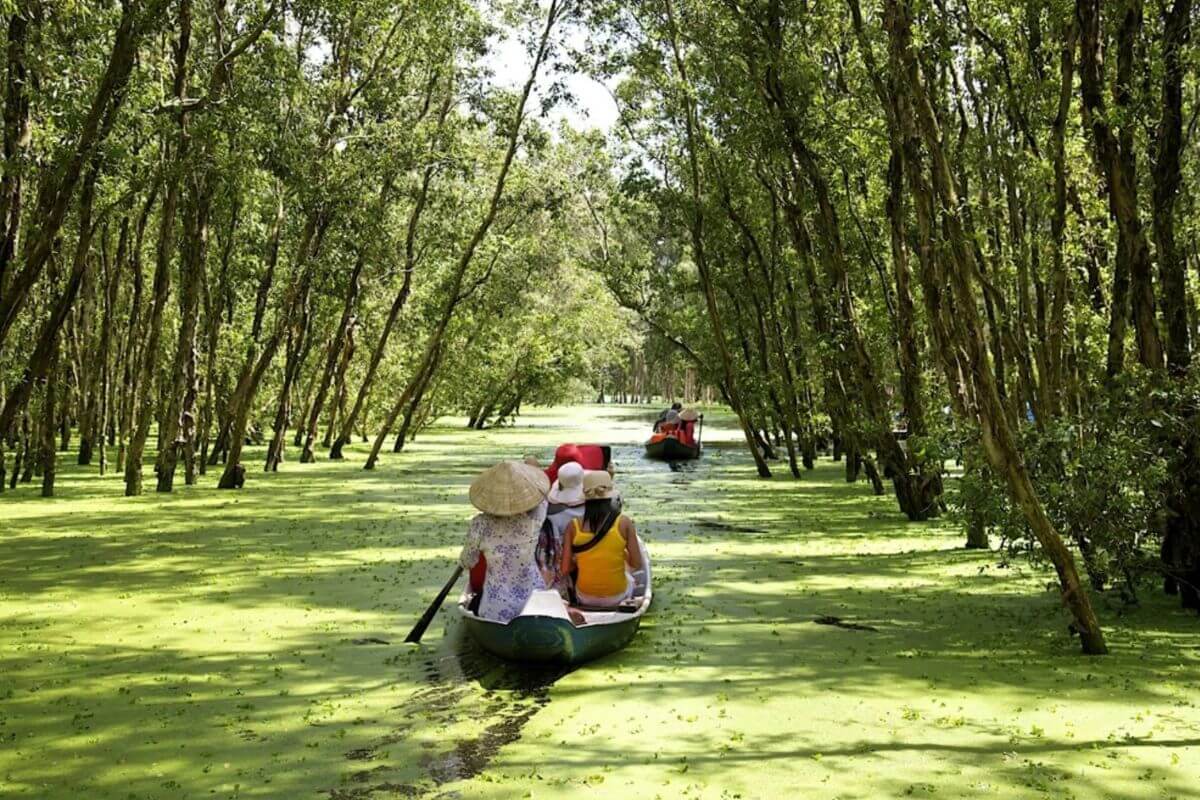
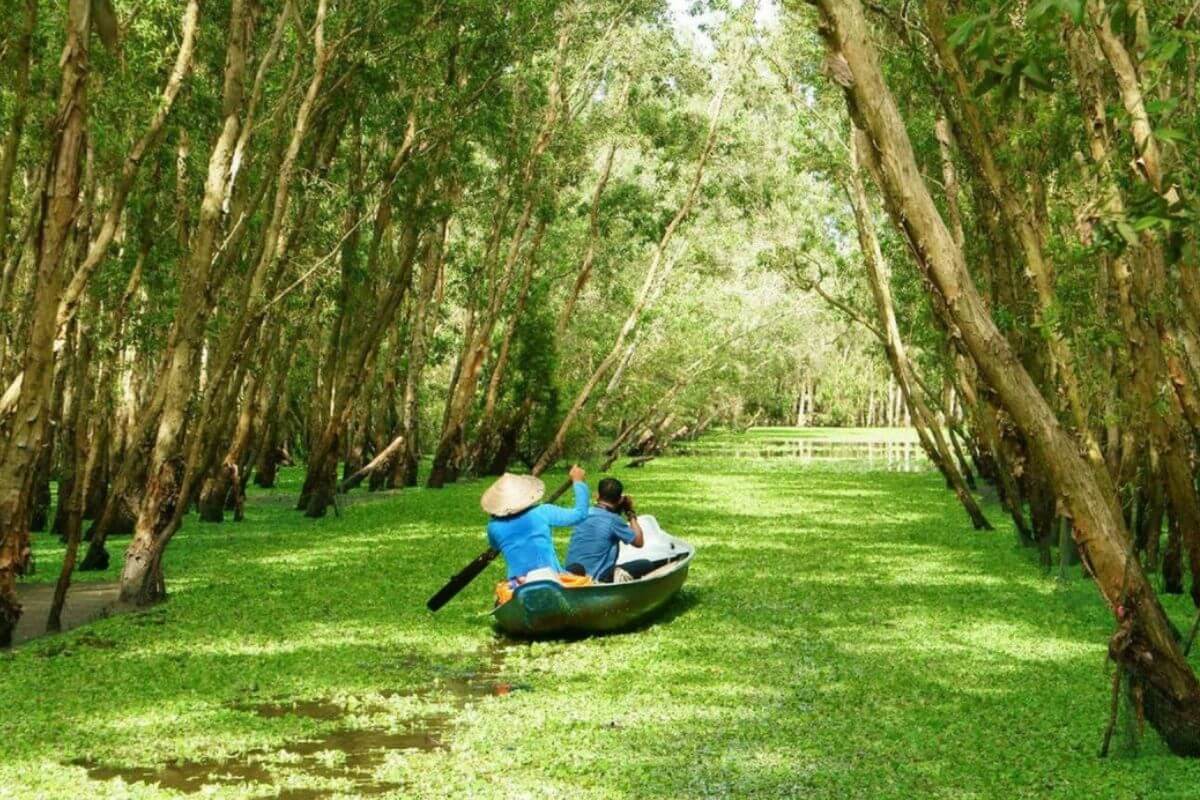
The Distinctive Beauty of Tra Su Cajuput Forest. The defining visual of Tra Su Cajuput Forest is its flooded cajuput trees rising from still water, with a natural carpet of duckweed covering the surface in luminous shades of green. As boats glide silently through narrow canals, the experience feels almost meditative – broken only by the flutter of wings or the distant call of water birds.
Unlike tropical rainforests or mountain jungles, Tra Su’s charm lies in its softness and subtlety. Light filters gently through thin tree canopies, reflections ripple across water paths, and every movement feels unhurried. This atmosphere makes Tra Su especially appealing to mature travelers, couples, photographers, and guests seeking tranquility rather than adventure tourism.
Best Time to Visit Tra Su Cajuput Forest
Timing is essential to appreciate Tra Su Cajuput Forest fully. The most recommended period is from September to November, during the Mekong Delta’s flood season. At this time, water levels rise naturally, duckweed spreads evenly, and wildlife activity peaks.
During these months, the forest is at its most photogenic. Birds migrate here in large numbers, canals are fully navigable, and the overall climate is cooler and more pleasant. Early mornings and late afternoons offer the best light conditions, especially for photography and birdwatching.
From December to April, the forest remains accessible, but water levels are lower, and the landscape appears less lush. While still peaceful, this season is better suited for travelers combining Tra Su with cultural or spiritual tours in An Giang rather than focusing purely on nature.
How to Visit Tra Su Cajuput Forest from Ho Chi Minh City - Saigon
Most international travelers visit Tra Su as part of a 2-day or 3-day Mekong Delta itinerary from Ho Chi Minh City. Due to the distance, private or small-group tours are highly recommended for comfort, flexibility, and deeper insight.
Well-designed itineraries typically include air-conditioned transport, knowledgeable guides, quality local meals, and carefully timed visits to avoid crowds. For travelers accustomed to premium travel standards, this approach ensures a seamless experience without logistical stress.
Top Things to do in Tra Su Cajuput Forest
Exploring Tra Su Cajuput Forest by Boat
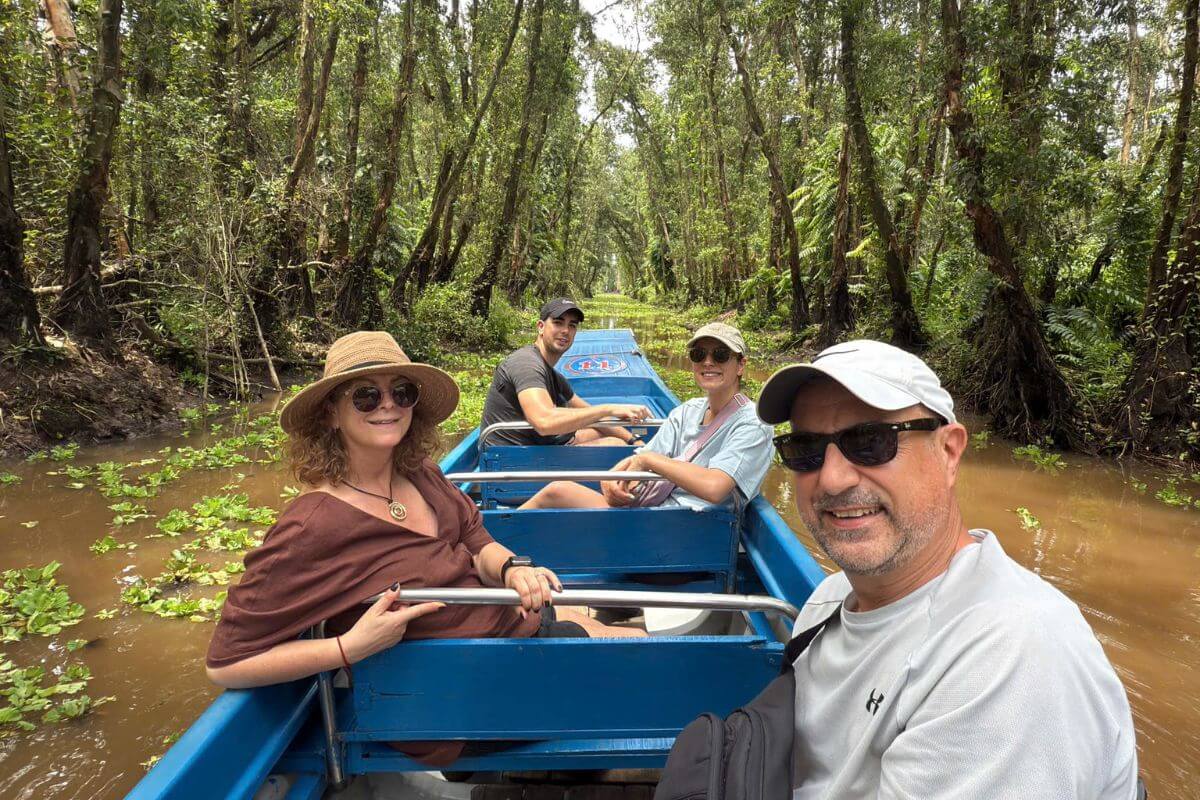
Boat exploration is the heart of the Tra Su experience. Visitors typically begin with a motorized boat ride that takes them deeper into the forest’s main waterways. This section offers a broader overview of the ecosystem and allows you to reach areas rich in birdlife.
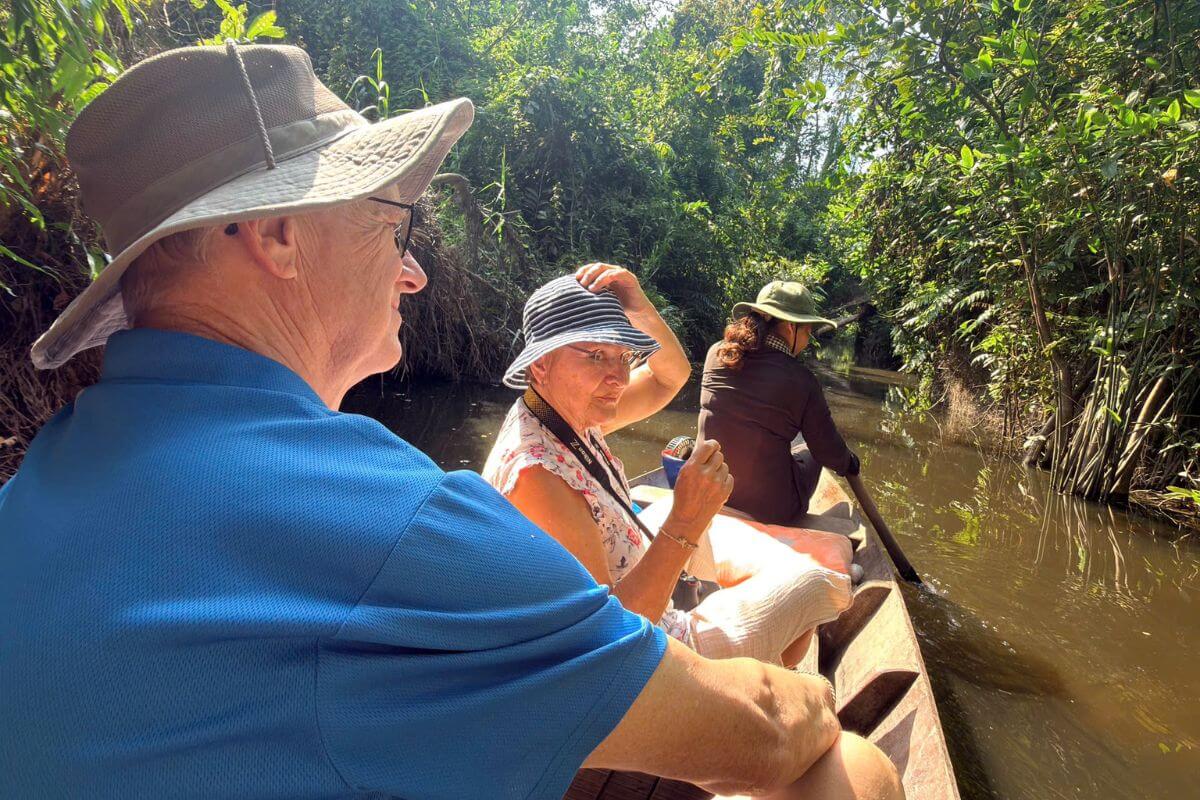
The highlight, however, is the traditional rowing boat journey. Rowed slowly by local boatwomen, these silent boats navigate narrow, winding canals where duckweed blankets the water surface. The absence of engine noise creates an intimate connection with nature, making it easy to observe birds nesting, fish moving beneath the surface, and insects hovering above the water.
For international guests accustomed to well-paced, comfortable travel, this combination of motorboat and rowing boat provides both convenience and authenticity without physical strain.
Wildlife and Birdwatching at Tra Su Cajuput Forest
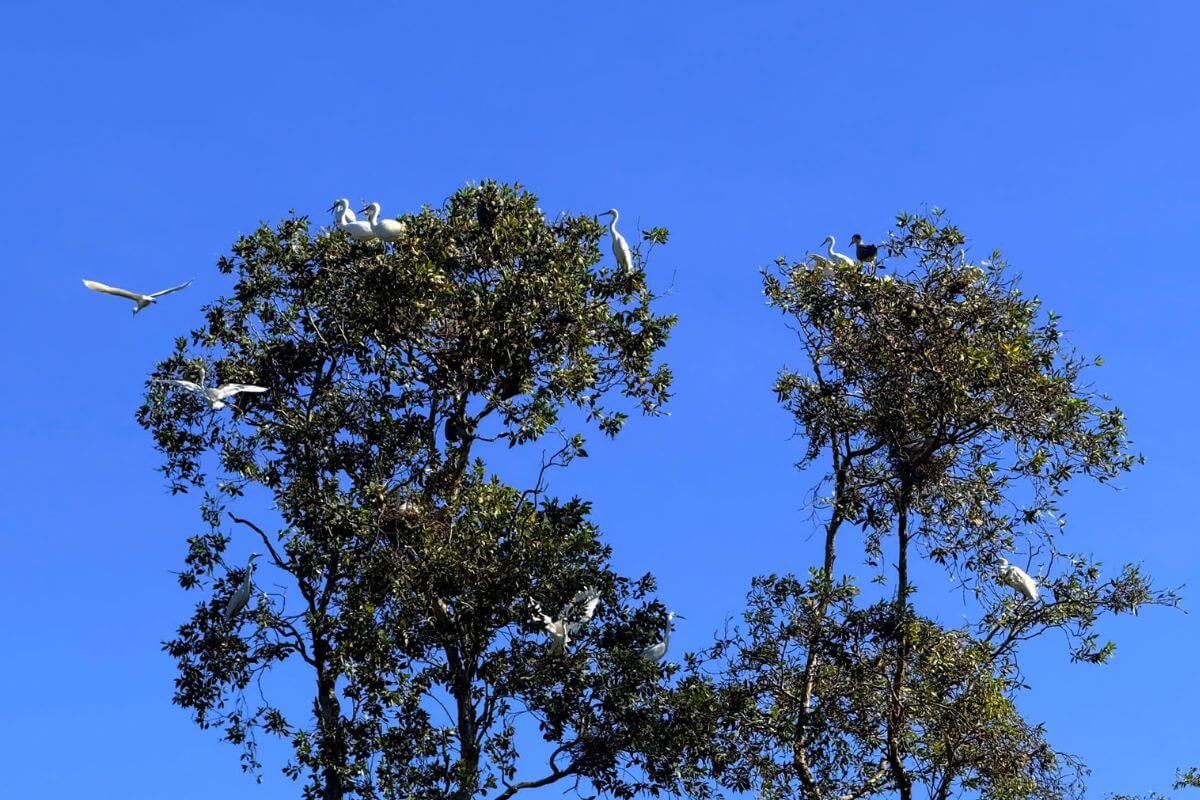
Tra Su Cajuput Forest is one of Southern Vietnam’s most important bird sanctuaries. During peak season, visitors can observe storks, herons, egrets, cormorants, and Asian openbills, often nesting in large colonies. Observation platforms and towers allow guests to view the forest canopy from above, offering a panoramic perspective ideal for photography.
Beyond birds, the forest supports a complex aquatic ecosystem. Fish species thrive beneath the duckweed, while reptiles and amphibians inhabit the quieter corners of the wetlands. For travelers interested in ecology or soft wildlife experiences, Tra Su provides rewarding encounters without the intensity of jungle trekking.
Cultural and Local Context Around Tra Su
While Tra Su itself is a natural reserve, its surrounding region adds cultural depth to the visit. An Giang Province is home to diverse ethnic communities, including the Khmer and Cham, each with distinct traditions, architecture, and cuisine.
Many curated tours from Saigon combine Tra Su Cajuput Forest with visits to local villages, floating houses, or spiritual sites, offering travelers a balanced journey that blends nature with cultural understanding. This context enriches the experience, transforming Tra Su from a scenic stop into a meaningful chapter of Southern Vietnam exploration.
Photography and Slow Travel at Tra Su Cajuput Forest
Tra Su is particularly popular among photographers and slow-travel enthusiasts. The forest’s soft lighting, reflective waterways, and natural symmetry create endless visual compositions. Whether using professional equipment or a smartphone, travelers find Tra Su forgiving yet inspiring.
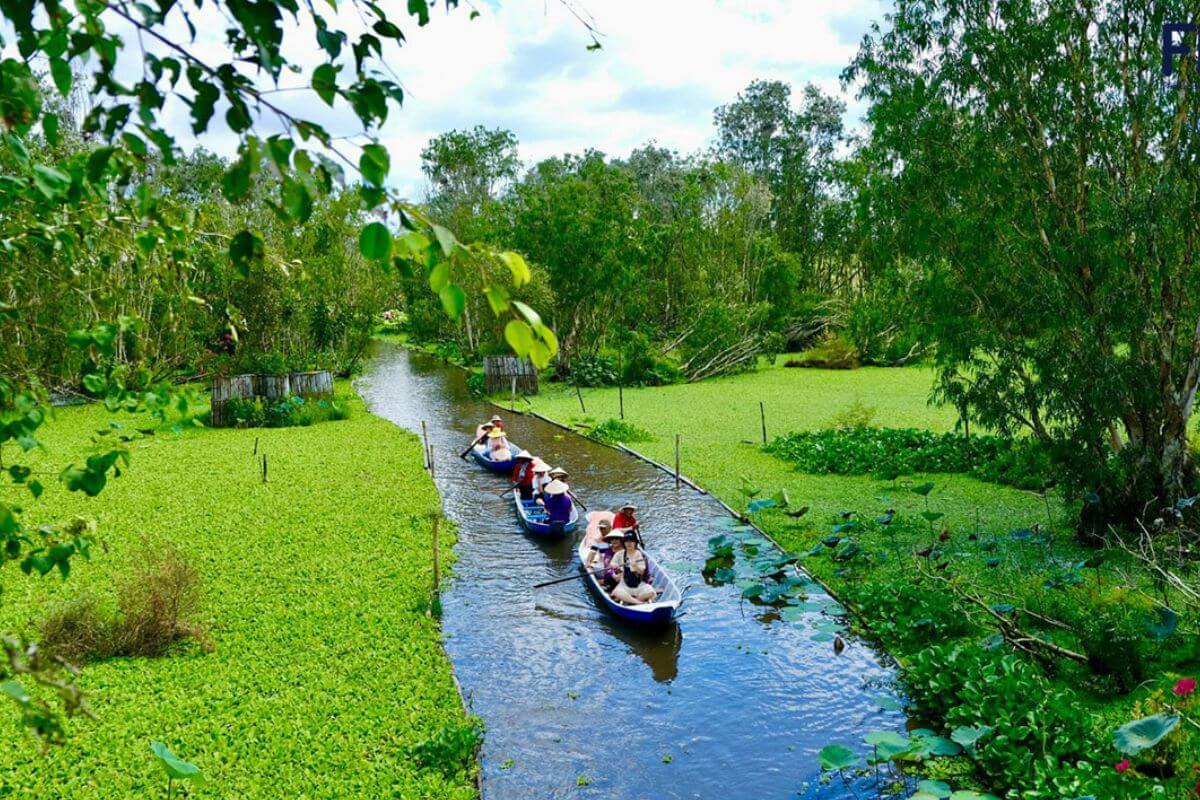
The key to photography here is patience. Moments unfold slowly – birds taking flight, ripples forming patterns, sunlight breaking through clouds. This rhythm aligns perfectly with travelers seeking mindful travel experiences rather than fast-paced sightseeing.
Sustainable Tourism and Responsible Visiting
Tra Su Cajuput Forest is managed with sustainability at its core. Visitor numbers are controlled, waterways are clearly designated, and local communities play an active role in guiding and maintaining the forest.
As a visitor, responsible travel means respecting wildlife, avoiding noise pollution, and following local guidance. Choosing ethical tour operators who prioritize conservation ensures that your visit contributes positively to the forest’s long-term preservation.
Frequently Asked Questions About Tra Su Cajuput Forest
What is Tra Su Cajuput Forest best known for?
Tra Su Cajuput Forest is best known for its flooded cajuput trees, emerald-green duckweed waterways, and rich wetland biodiversity. It is one of the most well-preserved mangrove-style ecosystems in Southern Vietnam and a major bird sanctuary in the Mekong Delta. Travelers value it for its peaceful atmosphere, scenic boat rides, and immersive nature experience rather than mass tourism attractions.
Is Tra Su Cajuput Forest worth visiting from Saigon?
Yes, Tra Su Cajuput Forest is absolutely worth visiting from Saigon, especially for travelers who enjoy nature, photography, and slow travel. Although it requires a longer journey, most international visitors combine it with a 2–3 day Mekong Delta itinerary. The contrast between bustling Ho Chi Minh City and the calm, untouched wetlands makes the experience especially rewarding.
How long should I spend at Tra Su Cajuput Forest?
A typical visit to Tra Su Cajuput Forest lasts around 2.5 to 3 hours, including motorboat and rowing boat experiences, wildlife observation, and time at the viewing tower. When traveling from Saigon, it is best enjoyed as part of an overnight or multi-day tour to avoid rushing and to fully appreciate the landscape at a relaxed pace.
What is the best time of day to visit Tra Su Cajuput Forest?
Early morning and late afternoon are the best times to visit Tra Su Cajuput Forest. During these hours, temperatures are cooler, lighting is softer for photography, and bird activity is more visible. Midday visits are still possible but may feel warmer and less atmospheric, especially during the dry season.
When is the best season to visit Tra Su Cajuput Forest?
The ideal time to visit is during the flood season from September to November. This is when water levels are high, duckweed fully covers the canals, and wildlife activity peaks. This period offers the most iconic scenery and the best conditions for birdwatching and photography
Is Tra Su Cajuput Forest suitable for senior travelers?
Yes, Tra Su Cajuput Forest is very suitable for senior travelers and guests aged 50+. The experience involves minimal walking, comfortable boat rides, and a gentle pace throughout the visit. Observation areas and pathways are well maintained, making it accessible for travelers who prefer relaxed, low-impact activities.
What wildlife can I see at Tra Su Cajuput Forest?
Visitors can expect to see a wide variety of bird species such as storks, herons, egrets, and cormorants, especially during the flood season. The forest is also home to fish, amphibians, and reptiles that thrive in the wetland environment. Wildlife sightings vary by season and time of day, but the biodiversity is consistently impressive.
Is Tra Su Cajuput Forest good for photography?
Tra Su Cajuput Forest is one of the best nature photography locations in Southern Vietnam. The reflective waterways, soft natural light, symmetrical canals, and abundant birdlife create excellent photographic opportunities. Both professional photographers and casual travelers will find the scenery visually captivating.
What should I wear when visiting Tra Su Cajuput Forest?
Lightweight, breathable clothing is recommended, along with comfortable walking shoes or sandals suitable for humid conditions. A hat, sunscreen, and insect repellent are useful, especially during warmer months. Neutral or muted colors are ideal for wildlife observation and photography.
Is Tra Su Cajuput Forest environmentally protected?
Yes, Tra Su Cajuput Forest is a protected ecological zone with strong conservation management. Visitor numbers are regulated, and tourism activities are designed to minimize environmental impact. By following local guidelines and choosing responsible tour operators, travelers help support long-term sustainability efforts.
Who is Tra Su Cajuput Forest most suitable for?
Tra Su Cajuput Forest is ideal for couples, mature travelers, eco-conscious visitors, photographers, and anyone seeking a calm, authentic nature experience. It may be less suitable for travelers looking for nightlife, adventure sports, or fast-paced sightseeing.
In a country known for vibrant cities and iconic coastlines, Tra Su Cajuput Forest offers something different: space to breathe, observe, and reconnect with nature. It represents a softer, more contemplative side of Vietnam that many travelers overlook.
For international guests exploring Southern Vietnam with Saigon Local Tour https://www.saigonlocaltour.com/, Tra Su is not just a destination – it is an experience that lingers long after the journey ends.
